Bacteria in food and the risks they pose
Remember that the human body is made up of many different interconnected systems. Improper functioning of one may affect others, so it is extremely important to try to protect yourself from contact with potentially dangerous microorganisms, including bacteria, through an appropriate lifestyle. Like any food, ice cubes can also contain them. This has been proven by experts from many renowned institutions around the world, who have spent years studying ice and the bacteria it contains, as well as their effects on the human body. During these studies, a number of bacteria that can harm us after consumption were detected in samples from bars, restaurants, various catering outlets, ice cube manufacturers, and "home-made" ice. There is no clear division as to the source of the ice. The likelihood of bacteria appearing at home, in catering equipment, or at manufacturers is high, and no source can be ruled out. In every case, regardless of location, ice contamination will be caused by the human factor and an inappropriate approach to ice preparation and production.
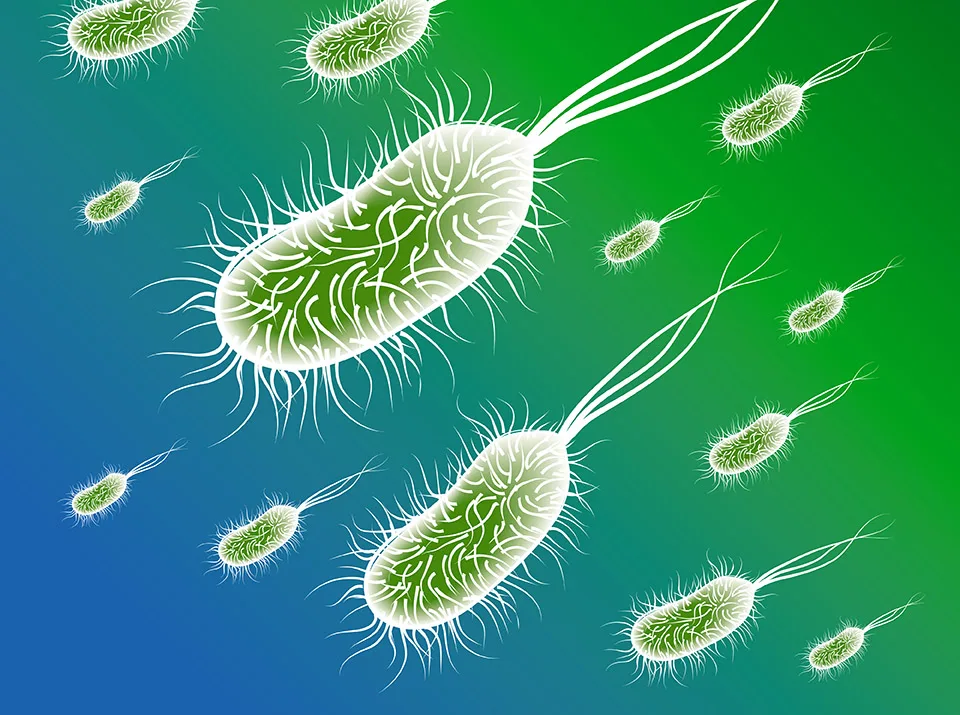
The most common bacterium found in contaminated ice is Escherichia coli. Escherichia coli is a bacterium that naturally occurs in the large intestine of humans and warm-blooded animals. It performs important functions there and is beneficial. E. coli participates in the breakdown of food and in the production of B vitamins and vitamin K.
As long as E. coli stays in the digestive system, it does not pose a health risk. However, if the bacteria manage to get elsewhere, they can cause various ailments and diseases. They are most often the cause of food poisoning. Symptoms of Escherichia coli infection in such a case include: vomiting, diarrhoea, abdominal pain, headaches, weakness, mild fever, and bloody stools. Coliform bacteria can also enter the urinary tract, causing urinary tract infections and inflammation of the bladder and kidneys. Pregnant women often suffer from urinary tract ailments caused by Escherichia coli.
Escherichia coli bacteria can also enter the respiratory tract and cause chronic sinusitis. In newborns, they can cause meningitis. Very often it is coliform bacteria that cause dangerous, and in extreme cases fatal, sepsis.
Bacteria that can also prove dangerous to our health include those from the Pseudomonas group, which particularly like a wet environment. The bacterium is present in the natural environment and does not pose a major threat to a healthy person, but if the immune system has certain deficiencies, i.e. the body has reduced immunity, the bacterium can cause a lot of trouble. It is responsible, among other things, for middle and outer ear infections, but also for a wide spectrum of respiratory infections (including pneumonia), as well as nervous, digestive, musculoskeletal and urinary system infections. It is also possible to cause myocarditis or meningitis. Pseudomonas aeruginosa can also seriously infect the cornea of the eye and cause dermatological problems.
It should be noted again, however, that such serious consequences of bacterial infection concern people with reduced immunity and those struggling with medical conditions such as cancer and cystic fibrosis, AIDS, or burns. Due to their preferred environment — damp and wet — and the resistance and activity of the bacteria (in relation to ice cube production), a particular level of safety of this environment must be maintained, and the entire production system must be looked after with special care.
Now for staphylococci — these ubiquitous bacteria are present virtually everywhere and are harmless to humans until they find the right conditions. Like E. coli, they mainly cause food poisoning. Infections mainly occur in summer, as a result of eating thawed food, including ice. Rapid absorption of exotoxins present in food by the body causes nausea and vomiting, abdominal pain, and fever.
It is also worth paying attention to the issue of fungi and mould. We will mainly encounter these at home and in catering. Mould and fungi can appear every time a freezer is defrosted, so improperly and inadequately cleaned doors, drawers, and compartments of the appliance pose a potential risk of them getting into frozen food. Their presence is also confirmed in inadequately cleaned equipment systems, e.g. ice cube makers in catering and hospitality.
Let us also remember the diversity of products stored in freezers — each of them carries different bacteria, which move from one product to another, creating a risk when consumed. In addition to those mentioned above, there is a whole host of bacteria that could potentially harm us. Knowing that we have obtained food-safe ice, it is worth remembering this and storing it properly.
Since there are about 100 ice manufacturers on the Polish market and only a few of them care about production standards, you can imagine the scale of the problem. Adding to this the potential source of infection in the form of "home-made ice" and ice available in catering in the broad sense, we are already off the scale… The fact that we do not associate our ailments with ice does not mean that their source was not exactly there. We would like to emphasise once again that ice cubes are food, and when choosing them, the consumer should be sure that it is a safe product. For this reason, we invite you to other sections of the website, where you will learn how to take care of ice cube production and what minimum requirements should be met to be sure that the ice produced does not pose a health risk.